
Introduction
The Internet of Things (IoT) has undergone a massive transformation over the last decade. We have moved from simple connected sensors to a global network of billions of devices. However, this rapid growth has hit a significant bottleneck. Traditional cloud-based architectures are struggling to keep up with the sheer volume of data being generated. This congestion leads to latency issues, high costs, and privacy concerns. To overcome these challenges, the industry is shifting toward a more decentralized approach. This is where On-Device AI comes into play, bringing intelligence directly to the hardware in this world where AIOT is gradually gaining popularity .
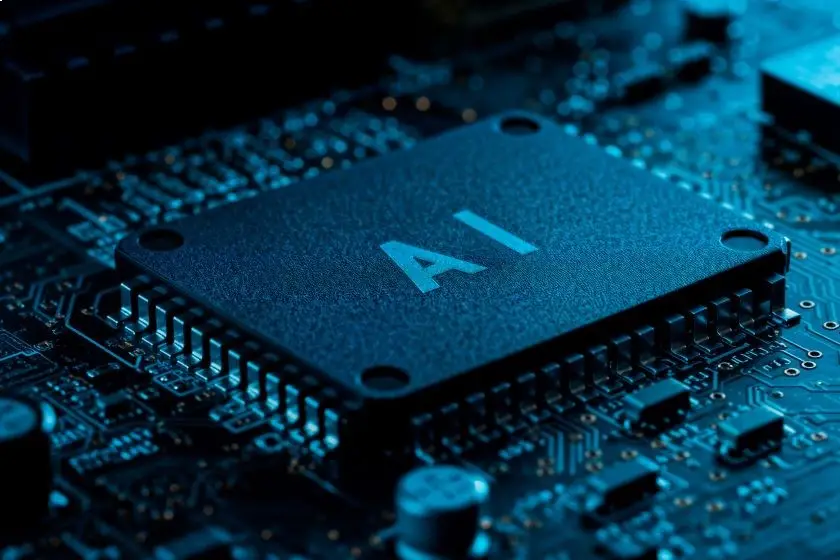
What Is On-Device AI? What Does It Mean for IoT?
In the early days of IoT, a device was merely a “mailbox” that collected data and sent it to a remote server for processing. On-Device AI changes this fundamental dynamic. Instead of relying on a distant cloud data center, the artificial intelligence models are integrated directly into the local device hardware.
For the IoT landscape, this means the “thinking” happens at the edge. Whether it is a smart camera identifying a package or an industrial sensor detecting a motor failure, the decision-making process is instantaneous. By eliminating the need for a constant middleman, we turn static hardware into autonomous, intelligent systems capable of complex reasoning in real time.
Market Research: The Potential of On-Device AI for IoT
The global transition toward localized intelligence is supported by powerful economic data. According to recent industry estimates, the market for On-Device AI solutions reached approximately US$10.1 billion in 2024, marking a significant 22 percent increase from the previous year. This upward trajectory is expected to continue with a compound annual growth rate (CAGR) of 25 percent, potentially driving the total market value to US$30.6 billion by 2029.
This growth reflects a fundamental shift in how enterprises view IoT infrastructure. While traditional cloud-based processing remains useful, a growing number of complex use cases now demand the specific advantages that only edge-based intelligence can provide. Industries ranging from consumer electronics to automotive and industrial manufacturing are increasingly adopting specialized hardware, such as AI-optimized microcontrollers (MCUs) and system-on-chips (SoCs), to achieve better performance per watt. As these local processing units become more sophisticated, the IoT landscape is evolving from simple connectivity to a future defined by autonomous, “locally intelligent” decision-making.
Top 4 Core Problems That On-Device AI Solves for IoT
Implementing On-Device AI is not just a trend; it is a practical necessity that addresses four critical pain points in the IoT industry.
Real-Time Performance and Low Latency
In many applications, even a one-second delay is unacceptable. For example, in industrial automation, a robot must stop immediately if it detects an obstacle. Waiting for a round-trip to the cloud could result in a catastrophic accident. Local processing ensures actions are taken in milliseconds, providing the split-second responsiveness required for safety-critical tasks.
Data Privacy and Security
Privacy is a top priority for modern consumers and regulated industries. Sending sensitive video feeds or personal health metrics to the cloud increases the “attack surface” for hackers. With On-Device AI, raw data never leaves the device. Only the finalized insight (like “heart rate normal”) is shared, significantly reducing the risk of data breaches and enhancing user trust.
Network Bandwidth and Cost
Transmitting high-definition video or high-frequency vibration data requires immense bandwidth. This leads to high cellular data costs and expensive cloud storage fees. By processing data locally, devices only transmit relevant summaries or alerts. This “data pruning” saves significant operational costs and prevents network congestion.
Reliability
Cloud-dependent devices often become useless or “brick” when the internet connection drops. This is a major risk in remote or harsh environments like oil rigs, deep mines, or large rural farms where connectivity is notoriously spotty. On-Device AI addresses this by enabling critical inference tasks to occur locally. While the device may still sync with the cloud for periodic updates, its core smart functions remain operational without a constant network heartbeat. This ensures that essential systems maintain their performance 24/7, providing a safety net regardless of the local environment.
Application Scenarios of On-Device AI
The versatility of local intelligence allows it to flourish across various sectors:
Smart Home & Consumer IoT: Smart locks use local facial recognition for instant entry, while voice assistants process commands locally for faster response times.
Smart Logistics: Modern asset trackers equipped with local intelligence can monitor high-value cargo without constant GPS pings. These devices can analyze motion patterns to detect theft or mishandling in real time, only alerting the cloud when a significant event occurs to save battery life.
IIoT & Predictive Maintenance: Advanced vibration sensors on factory floors analyze vibration and acoustic patterns to predict bearing failures before they happen. This local anomaly detection prevents expensive production halts.
Smart Cities & Urban Infrastructure: Intelligent traffic lights analyze vehicle flow at the intersection to reduce congestion without sending constant video feeds to a central hub.
Healthcare & Wearable Devices: Portable EKG monitors can detect arrhythmias in real time, alerting the user immediately rather than waiting for a cloud sync.
Agriculture & Environmental Monitoring: Autonomous drones and IoT sensors can identify specific weed species or moisture levels in a field. They apply targeted treatment or irrigation even in areas with zero cellular coverage.
Conclusion
The evolution from “Connected IoT” to “Intelligent IoT” is well underway. By moving the analytical heavy lifting from the cloud to the edge, On-Device AI solves the most pressing challenges of latency, privacy, cost, and reliability. As we look forward, the most successful IoT solutions will be those that can think for themselves, providing faster and safer experiences for everyone.
 Chat now